
Published 4 November 2026 · 7 min read
Two experiences in one protected landscape
Yes. Pamukkale’s travertines and Hierapolis belong to the same UNESCO World Heritage property, so a single visit can take in both. Mineral-rich thermal water shaped the setting in which the spa town developed. UNESCO describes a close relationship between the natural terraces and the Greco-Roman and Byzantine remains. Many visitors photograph the white slope and leave before understanding the city above it. Others cross the ruins without seeing the water and its changing light. Plan these as two connected chapters, and the whole site becomes easier to read.
Decide what matters most before arriving
Are you most interested in the terraces, the theatre, the history of bathing, or a comfortable walk with a view? The answer should determine your route. A family with children may choose the permitted water area and one major monument. An archaeology enthusiast may spend longer among the theatre, streets and necropolis. Neither plan needs to cover every labelled point. Look at the official site map before departure; entrances, routes and controlled zones can change. Give your group a realistic pace, especially on uneven ancient surfaces.
Read the terraces as geology, not a swimming resort
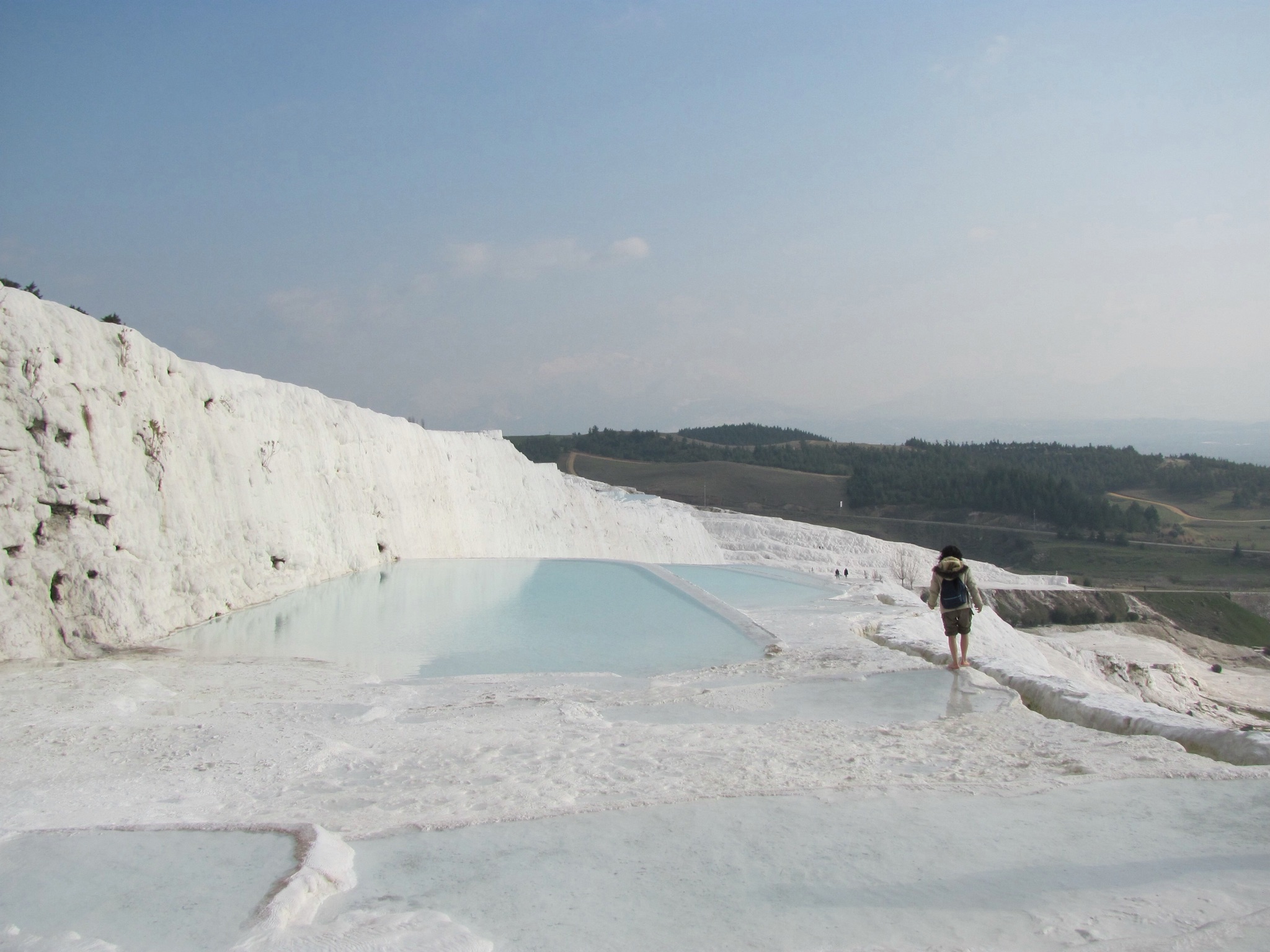
The bright surface forms where calcium-rich spring water deposits calcite. UNESCO describes stepped basins, petrified cascades and a cliff above the plain. Water management is part of protecting that fragile appearance. Do not assume that every white basin shown in a photograph is open for walking or bathing today. Follow the signs and staff directions for the designated visitor area, and keep out of closed sections even if they look dry or empty. If a particular pool is essential to your plans, check its current status through the official operator shortly before your visit. A thoughtful visit protects the surface that makes Pamukkale distinctive.
Start with a simple route, then adjust
A workable route begins at the entrance appropriate to your transport and current access rules, pauses at an authorised view of the travertines, then continues into Hierapolis. Check the current map rather than assuming that a route described online will always be available. If your group has limited stamina, choose a short archaeological loop instead of attempting every distant monument. Keep a return point and meeting place clear, particularly when travellers move at different speeds. In a private itinerary from Denizli, discuss pickup, walking comfort and priorities before setting off; our Pamukkale and Hierapolis tour is the relevant option. The operator should explain the actual day's route, not promise unrestricted access to every terrace.
Give the theatre its own moment
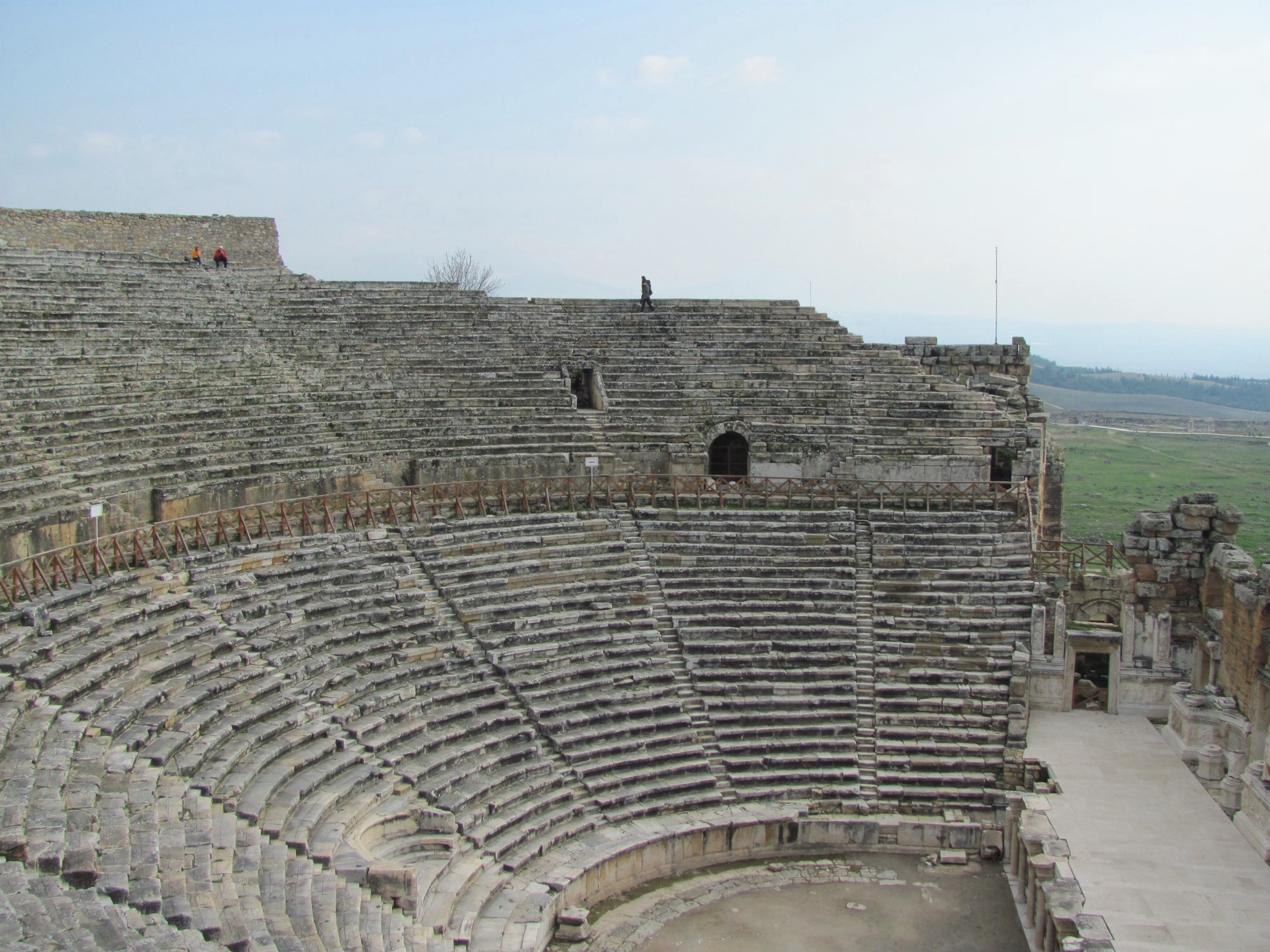
The theatre is one of the clearest places to recognise Hierapolis as a substantial ancient city rather than a set of isolated stones. UNESCO highlights its architectural and sculptural importance in the World Heritage description. From the audience area, notice how the seating, stage and surrounding landscape form one composition. Read the on-site interpretation before attaching a date or a story to an individual fragment; archaeological understanding and accessible zones can change. If the climb or steps are difficult for someone in your party, decide in advance whether a viewpoint from another accessible place will be more enjoyable. A brief, attentive stop can be more rewarding than rushing to the top for one photograph.
Think about the people who lived and visited here
Hierapolis was a thermal town, not only a scenic viewpoint. The ancient baths, streets, religious buildings and extensive necropolis tell different parts of its story. UNESCO notes that the necropolis stretches for more than two kilometres and that early Christian monuments add another layer to the landscape. You need not walk its full length to recognise that people came here to bathe, worship, work and bury their dead. Choose two details to compare: perhaps a bath structure and a tomb, or the theatre and a church site. This small exercise keeps the visit grounded in human experience. Our Ephesus planning guide offers a similar way to choose priorities at another large ancient site.
Treat the museum as an optional third chapter
The Hierapolis Archaeology Museum can add context to the outdoor walk, but it should not become a compulsory stop. First check its official page for access and ticket conditions. If your group enjoys inscriptions, sculpture and smaller finds, allow time to read labels. If weather or mobility makes an indoor stop attractive, the museum may be useful. If not, give the terraces and a few ruins more breathing room. The best itinerary is the one you can actually enjoy, not the one with the longest list of names. Keep the museum as an option rather than an assumption.
Keep practical details current
Entrance charges, opening hours, pool access and any separate admission arrangements are changeable. This guide therefore does not quote a price or a timetable. Check the official Hierapolis site page close to your travel date, then confirm any additional museum or bathing conditions separately. Wear footwear suited to the walking route, bring water, and plan shade and breaks according to the weather. Follow on-site rules for footwear in any permitted water area. Do not take a historic image as evidence of current access. If you need a step-free route, ask the site and your transport provider about the specific entrance and path available on your date.
A day trip needs a margin, not a stopwatch
A relaxed visit is easier when transport and return plans are settled in advance. If you are starting in Denizli, check where you will be collected and which entrance your vehicle can use. If you are combining Pamukkale with a longer regional journey, remember that road travel, meals and breaks consume part of the day. Do not promise yourself the terraces, every ruin, the museum and a swim in a narrow time window. Decide on one essential experience and one optional addition. Photograph the terraces from approved positions, then put the camera away long enough to look at the scale of the cliff and city. Leave room for a slower walker or an unexpected closure.
Leave with the connection in mind
At the end, ask what connects the white formations with the buildings above them. The thermal waters attracted attention and use across many centuries, while the surviving structures show how a town adapted to this remarkable setting. That relationship is why the UNESCO designation treats Hierapolis and Pamukkale together. Revisit an official map or your photographs and notice how the theatre, baths, necropolis and terraces occupy different parts of one landscape. For comparison, our Terrace Houses guide explores another way ancient people shaped their surroundings. You need not see everything in a single visit to come away with a clear, memorable story.
Check current entrances and permitted terrace areas with Türkiye Museums before travelling.
Sources
All guides
- Visiting the House of the Virgin Mary near Ephesus: a thoughtful first-timer’s guide
- Can you add Şirince after Ephesus? A relaxed half-day plan
- Ephesus entrance fee, opening hours & walking route: visitor guide
- Is the Basilica of St John worth visiting after Ephesus?
- After the ruins: should you visit the Ephesus Museum in Selçuk?
- Visiting Ephesus from the Kuşadası cruise port
- The Library of Celsus
- The Great Theatre of Ephesus
- The Terrace Houses of Ephesus
- The House of the Virgin Mary
- The Temple of Artemis