Published 2026-10-31 · 6 min read
A different chapter of Ephesus
The Basilica of St John is worth adding if you want to understand what happened after the monumental Roman streets of Ephesus ceased to be the centre of local life. The basilica stands on Ayasuluk Hill in Selçuk, within the wider Ephesus World Heritage landscape. It is a ruined church rather than an intact interior, so the visit asks you to read foundations, columns and views. That is its appeal: the hill connects early Christian pilgrimage with the later town and the castle above. If you have limited time, make a deliberate choice between this stop and another long walk inside the ancient city. Both are rewarding, but they answer different questions about Ephesus.
Why the hill matters
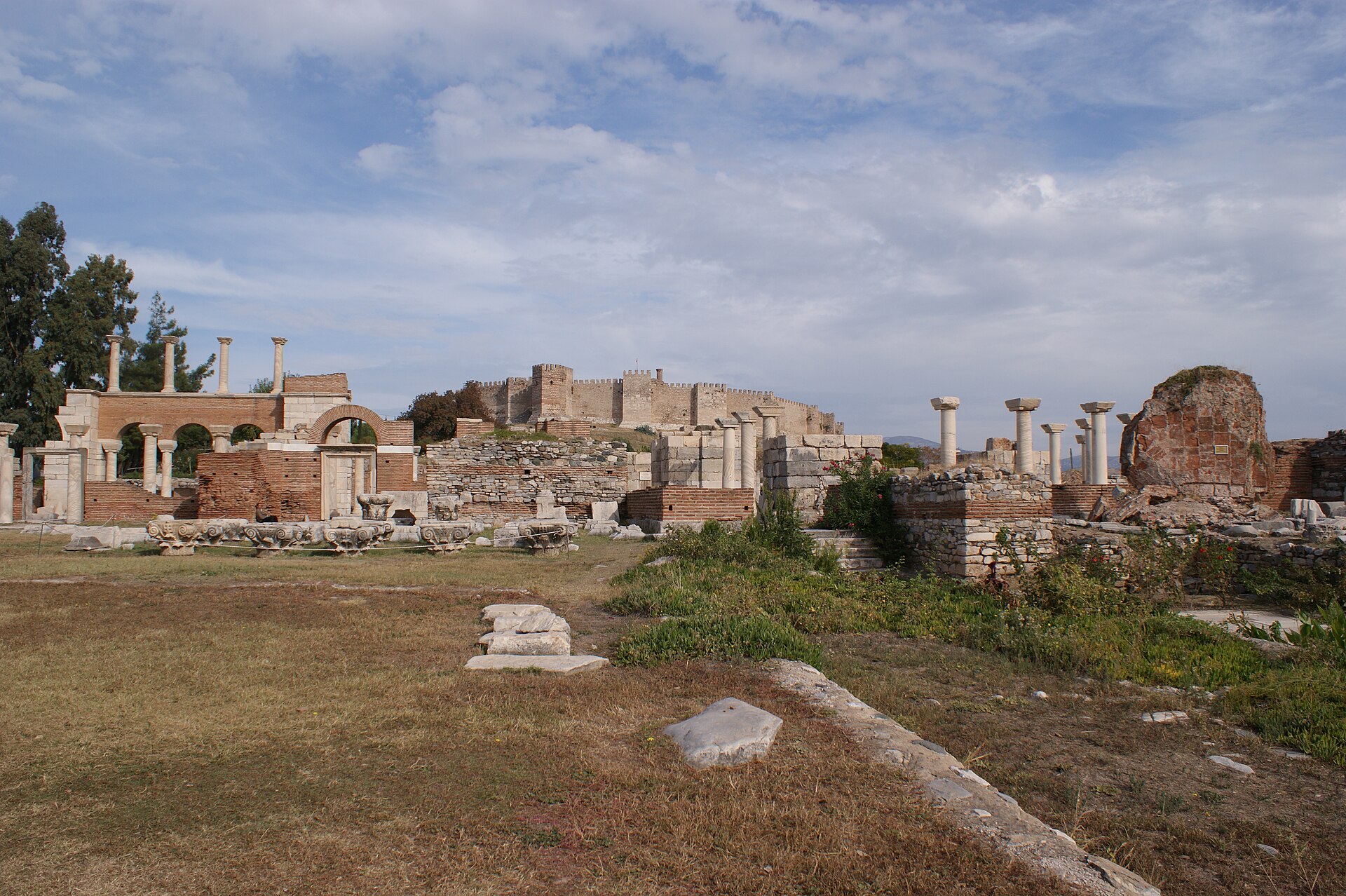
UNESCO describes Ephesus as a landscape of settlements that shifted over time, partly as the coastline changed. Ayasuluk Hill, the Artemision and the medieval settlement form a component of that protected property. Looking across the area therefore helps explain why the story of Ephesus does not end at the lower archaeological site. The Roman city, the sanctuary of Artemis and the hill represent different centres of attention across a long history. From the basilica grounds, pause to orient yourself before reading the ruins. The ground beneath your feet belongs to a town that continued to change after the period most visitors associate with the Library of Celsus. A map makes these relationships easier to see.
Tradition and evidence
Christian tradition associates the hill with John the Apostle and his burial. The İzmir culture authority describes a church that developed around the revered tomb, while the official museum account notes an earlier simple memorial and a fifth-century timber-roofed basilica. These accounts explain the religious meaning of the place; they should not be flattened into a claim that every detail of the tradition has been archaeologically proved. At the site, you can respect its importance to pilgrims and still ask what the surviving architecture establishes. This distinction makes the visit more interesting, not less. It allows the ruins, the written tradition and later rebuilding to be considered together without asking one kind of evidence to do all the work.
Read the plan, not just the columns
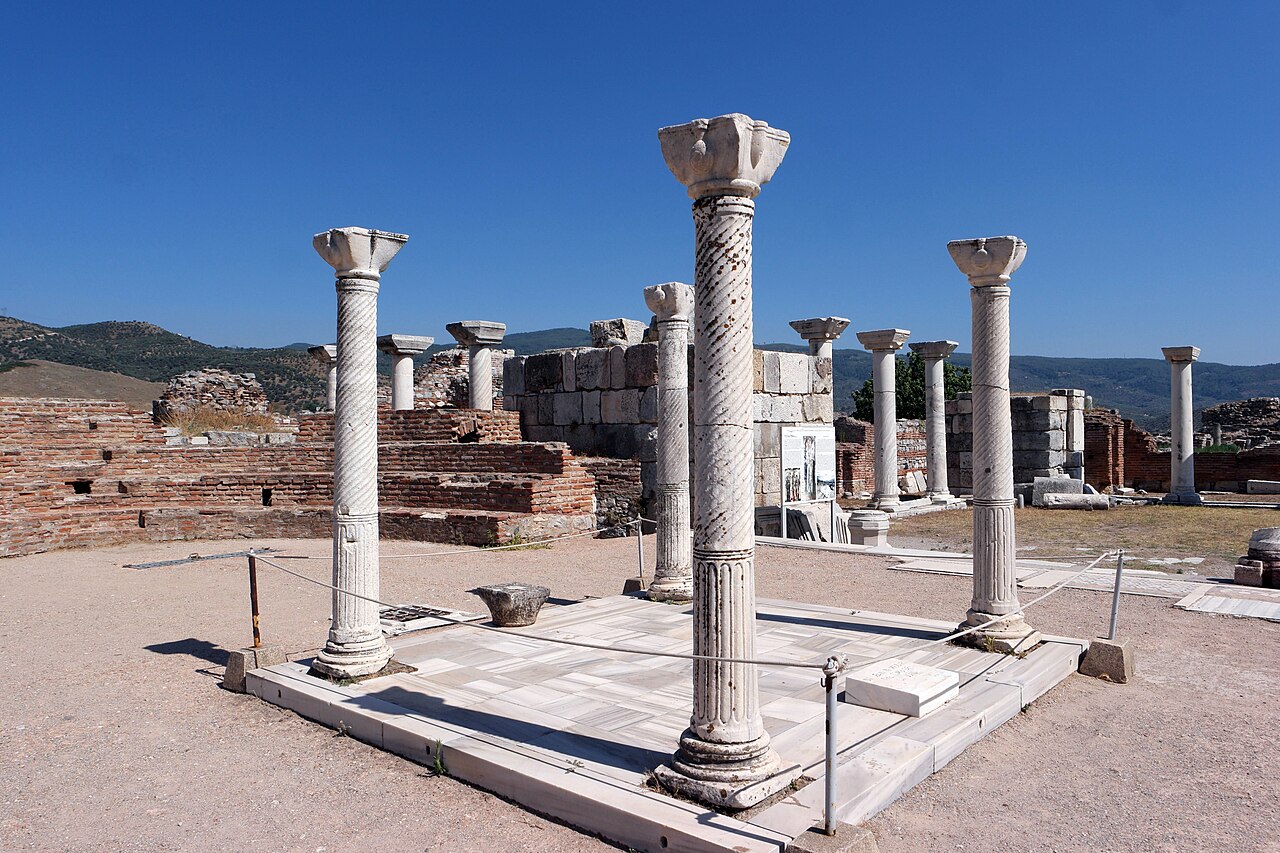
The remaining columns are photogenic, but the basilica is best approached as a plan. Walk slowly along the accessible route and notice how open courts, walls and changes in level suggest movement toward a focal place. Use information panels on site to identify the principal spaces; conditions of access and interpretation can change. Stand back occasionally rather than studying every stone from close range. The full building is no longer standing, and a photograph of one restored corner can give a misleading impression of completeness. Try to imagine how a visitor might have entered, gathered and moved through the complex. The exercise turns apparently scattered fragments into parts of a place designed for worship and pilgrimage.
The memorial at the centre
The area traditionally linked to John's tomb is the emotional focus for many visitors. In the surviving remains you can see how later builders marked a place regarded as sacred. Approach it as a memorial within a long sequence of buildings, not as a self-explanatory object. A short pause here is more valuable than a hurried photograph. Look outward afterward: the relationship between the memorial, the wider church and the hill tells you why a burial tradition could shape an entire neighbourhood. Our House of the Virgin Mary guide discusses another place where faith and history meet near Ephesus, while keeping tradition distinct from demonstrable fact.
The castle and later Selçuk
Above the basilica stands Ayasuluk Castle. The Türkiye Museums description attributes the visible inner castle walls to the Seljuk and Ottoman periods and identifies remains within the enclosure, including cisterns, a mosque, a residence and a bath. This setting is a reminder that the hill continued to matter after the basilica's main period. Do not treat the castle merely as a backdrop for church photographs. It represents another phase of urban life, control and building on the same height. Whether every part of the castle is accessible on your visit should be checked with the current official site information. Even from the basilica area, the layered skyline is a useful lesson in Selçuk's changing history.
How to fit it into a route
For a day centred on Ephesus, decide first how much time you want inside the ancient city. If your interests are biblical history, the basilica can form a meaningful continuation alongside the Church of Mary in Ephesus or a carefully planned visit to the House of the Virgin Mary. If your interests are Roman domestic life, the Terrace Houses may deserve your extra time instead. Our Kuşadası cruise-port planning guide explains why the ship's all-aboard time must set the day's limits. A private Biblical Ephesus tour can be discussed around your priorities, with a route confirmed before travel. Avoid building an itinerary from a list of names alone.
Practical points before you go
Check the official Türkiye Museums page near your travel date for current access, admission arrangements and opening information. Do not rely on an old ticket price or a photograph of a sign. The visit involves an exposed archaeological landscape, so allow for uneven ground, weather and a pace that suits your group. Wear shoes suited to walking on stone and carry water when conditions are warm. If someone in your party has limited mobility, ask about the specific route that will be open on the day rather than assuming the entire complex is step-free. In the basilica area, read the displayed interpretation before drawing conclusions from isolated walls or columns. These small preparations make the stop calmer and more useful.
What you take away
The Basilica of St John is most rewarding when it changes your mental map of Ephesus. The marble streets of the Roman city are only one stage of the area's history. On Ayasuluk Hill, early Christian memory, monumental building and later medieval structures occupy the same landscape. You do not need to settle every historical question during a visit. Instead, leave with a clearer sense of how places acquire new meanings while older layers remain visible. If you have time for only one additional stop after the ancient city, choose the basilica when this transition interests you most. If you choose the Ephesus Museum instead, you will follow the portable objects of the city. Either choice can deepen the day when given enough attention.
Decide whether the hill's early Christian history or more time in Roman Ephesus matters most to your group, then protect the return time.